Widescreen has been the movie industry standard for how many decades now? IMAX is its own beast but most movies aren’t filmed in real IMAX resolution and now there’s digital IMAX which is basically 19:10 which is the same as many TVs…
Movies used to be all 4:3 before tv. It’s called the academy ratio. Movies now do 1.85:1 and even 2.39:1. A few even do anamorphic 2.76:1. Anything but the dominant home format.
Major movie studios have mostly used widescreen since the 1950s and all the different ratios you mentioned except 4:3 are better watched on a widescreen TV than a 4:3 TV.


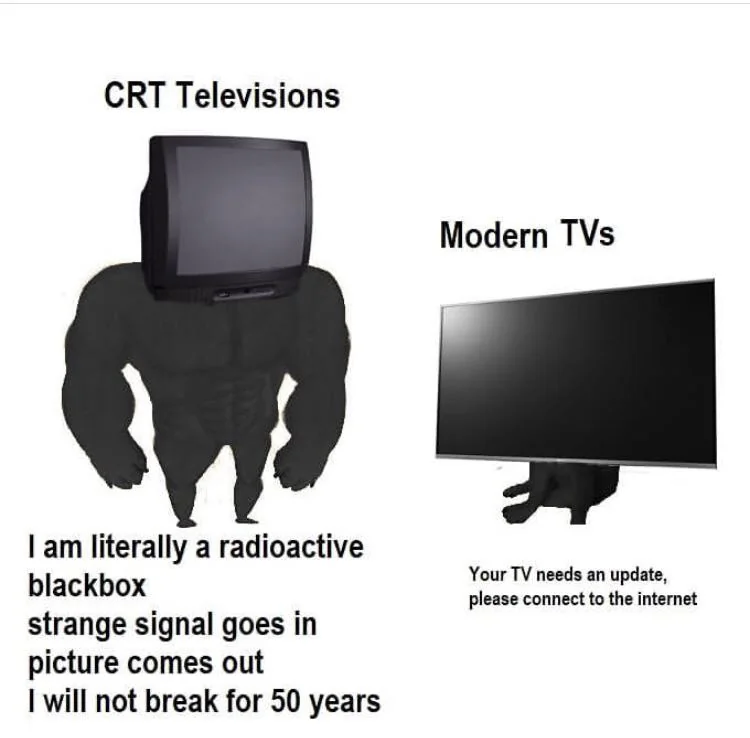
Their screen was curved the wrong way until they released flat screen TVs
4:3 resolution meant you lost some of the content from movies or you watched them with black bars
Except movies keep changing so now if you want imax at home you need 4:3.
Whatever isn’t available at home is what movies will change to to keep themselves unique.
Widescreen has been the movie industry standard for how many decades now? IMAX is its own beast but most movies aren’t filmed in real IMAX resolution and now there’s digital IMAX which is basically 19:10 which is the same as many TVs…
Movies used to be all 4:3 before tv. It’s called the academy ratio. Movies now do 1.85:1 and even 2.39:1. A few even do anamorphic 2.76:1. Anything but the dominant home format.
Major movie studios have mostly used widescreen since the 1950s and all the different ratios you mentioned except 4:3 are better watched on a widescreen TV than a 4:3 TV.
4:3 resolution also means that a lot of good shows will never be watchable in the proper 16:9 format
No, it means 4:3 IS proper format