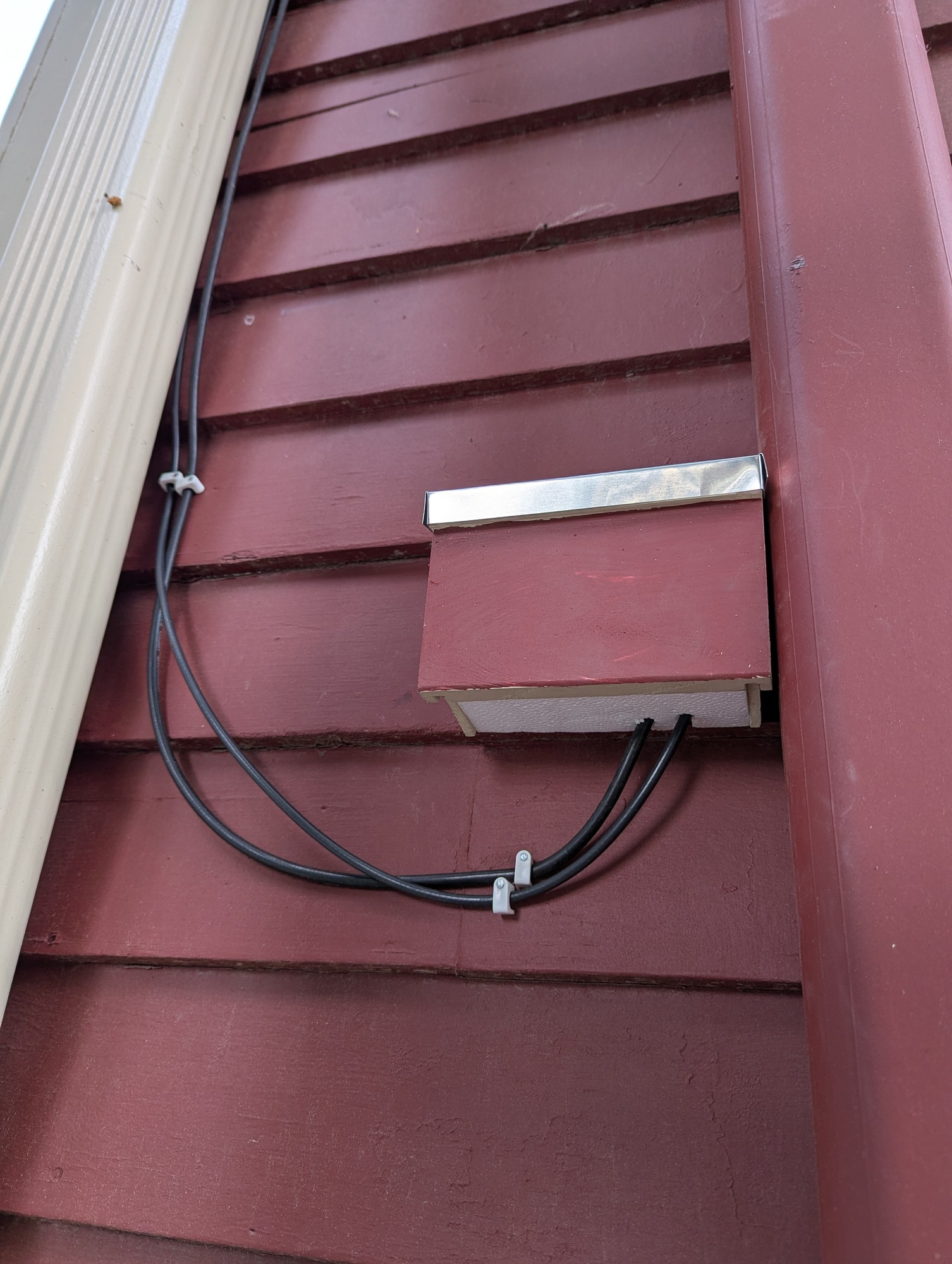
I’ve been bringing my coax in through the window, and wanted something more permanent. There was already an old cable internet coax (no longer in use) so I started by removing that and then reused the location.
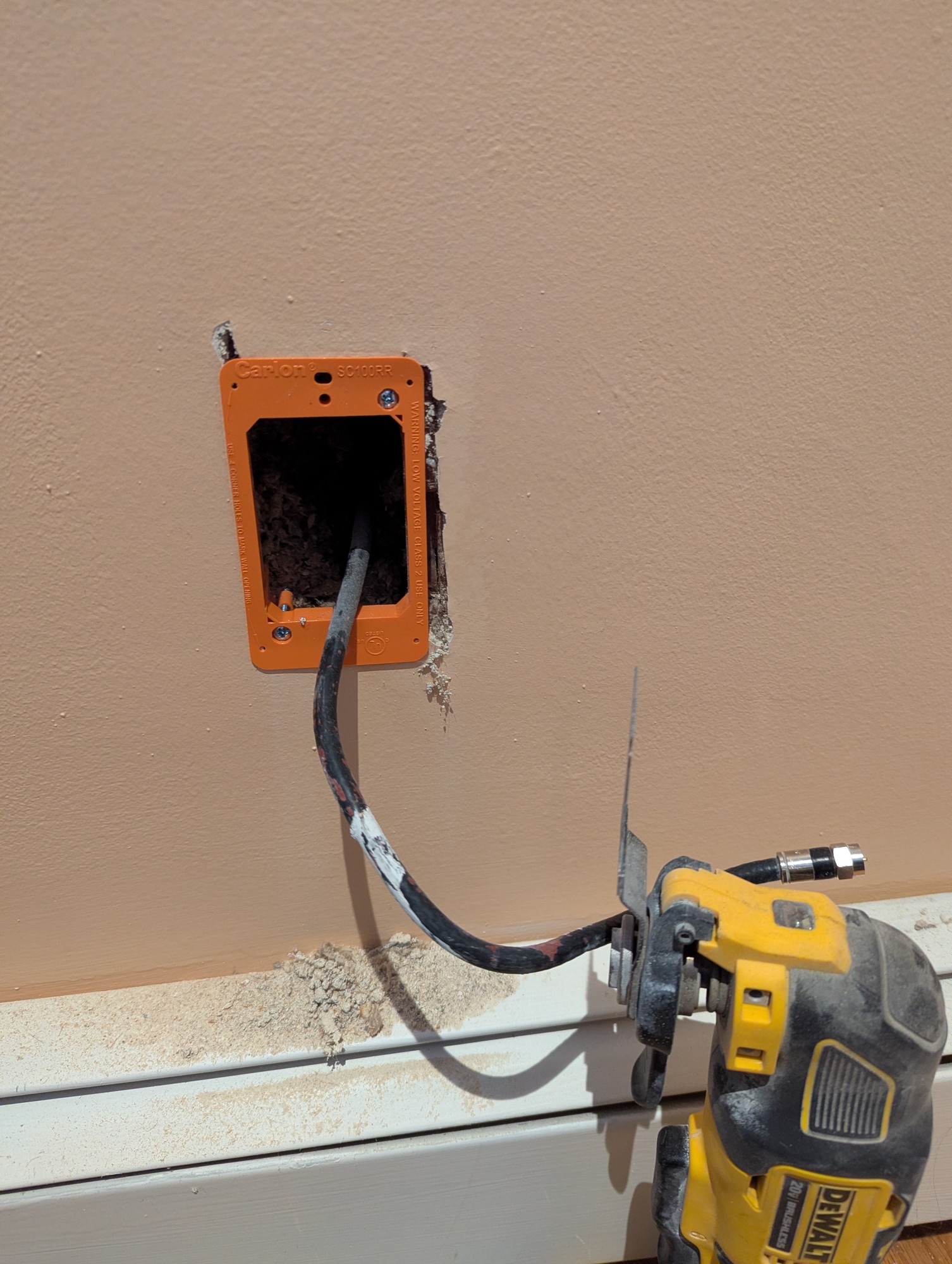
The previous install had just drilled a 1’ hole in the wall, so I expanded the opening with my vibratory saw (lots of plaster dust and terrible noise). I overshot slightly but not too bad, and used a low-voltage work box.
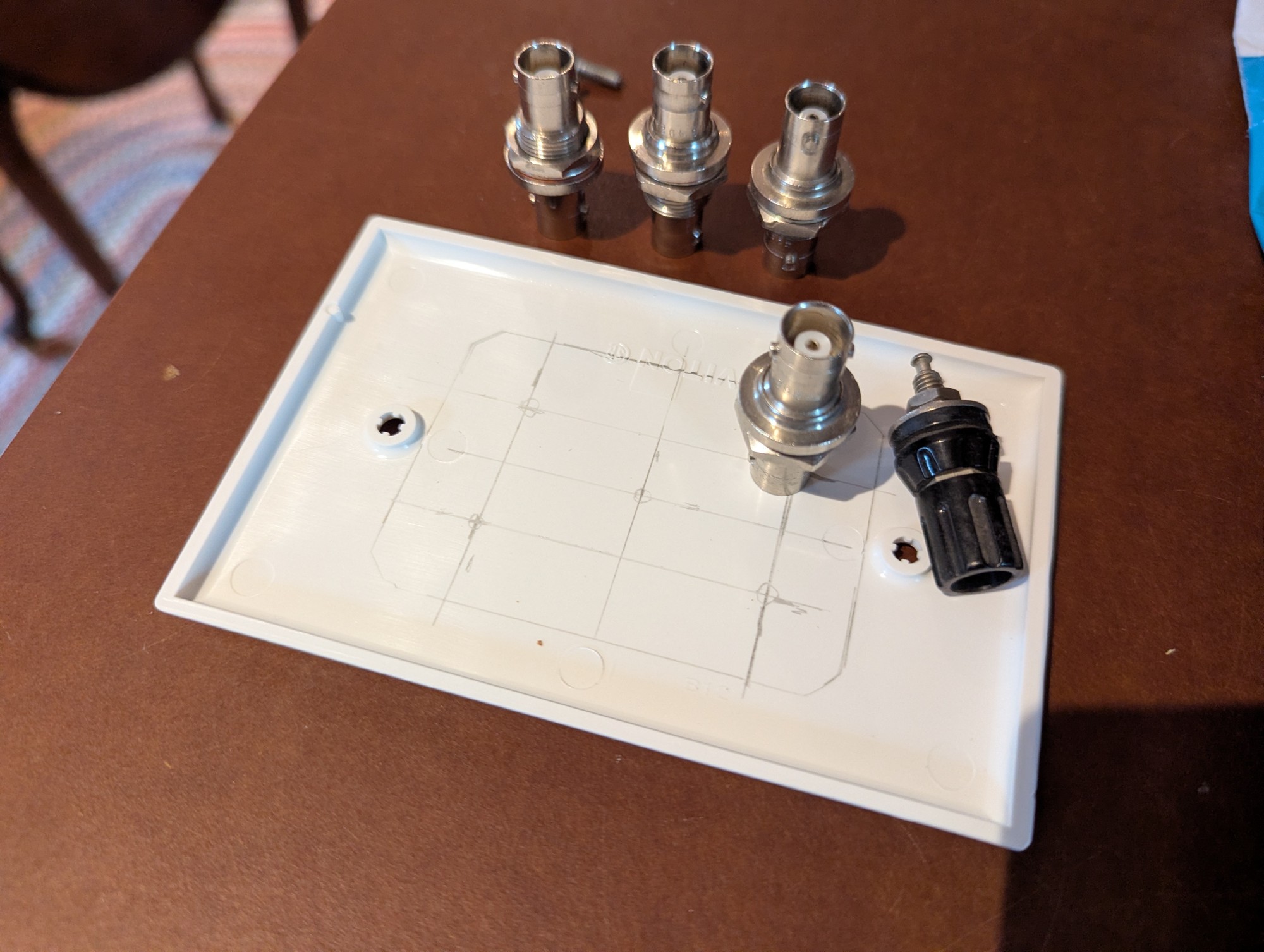
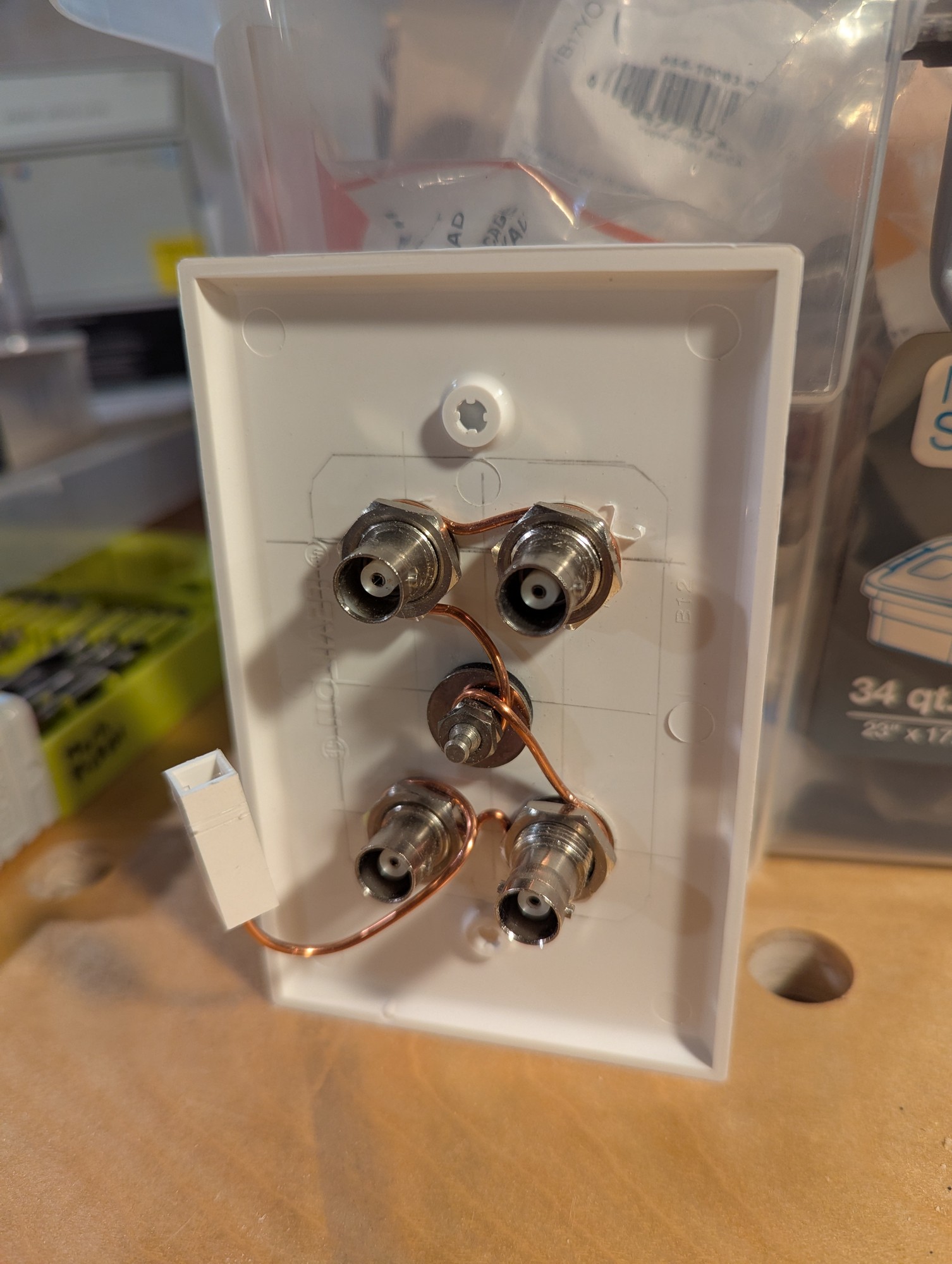
I got some BNC bulkhead female-female connectors and a banana connector (?) at a flea market, and drilled holes in a blank wall plate. I would have liked to use a metal plate but didn’t find one at the local hardware store. A piece of bare copper wire leftover from romex is prepared for a ground connection.
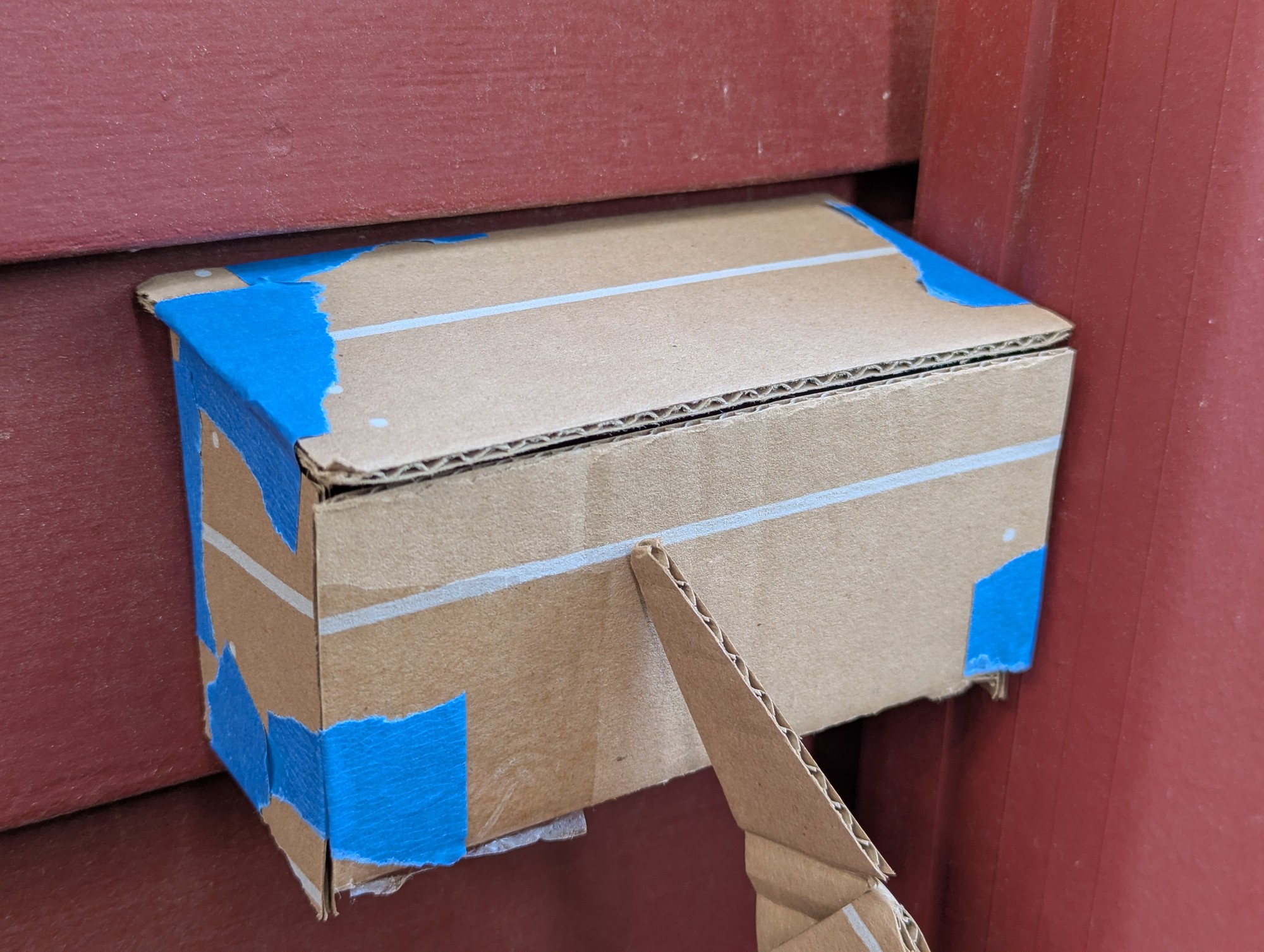
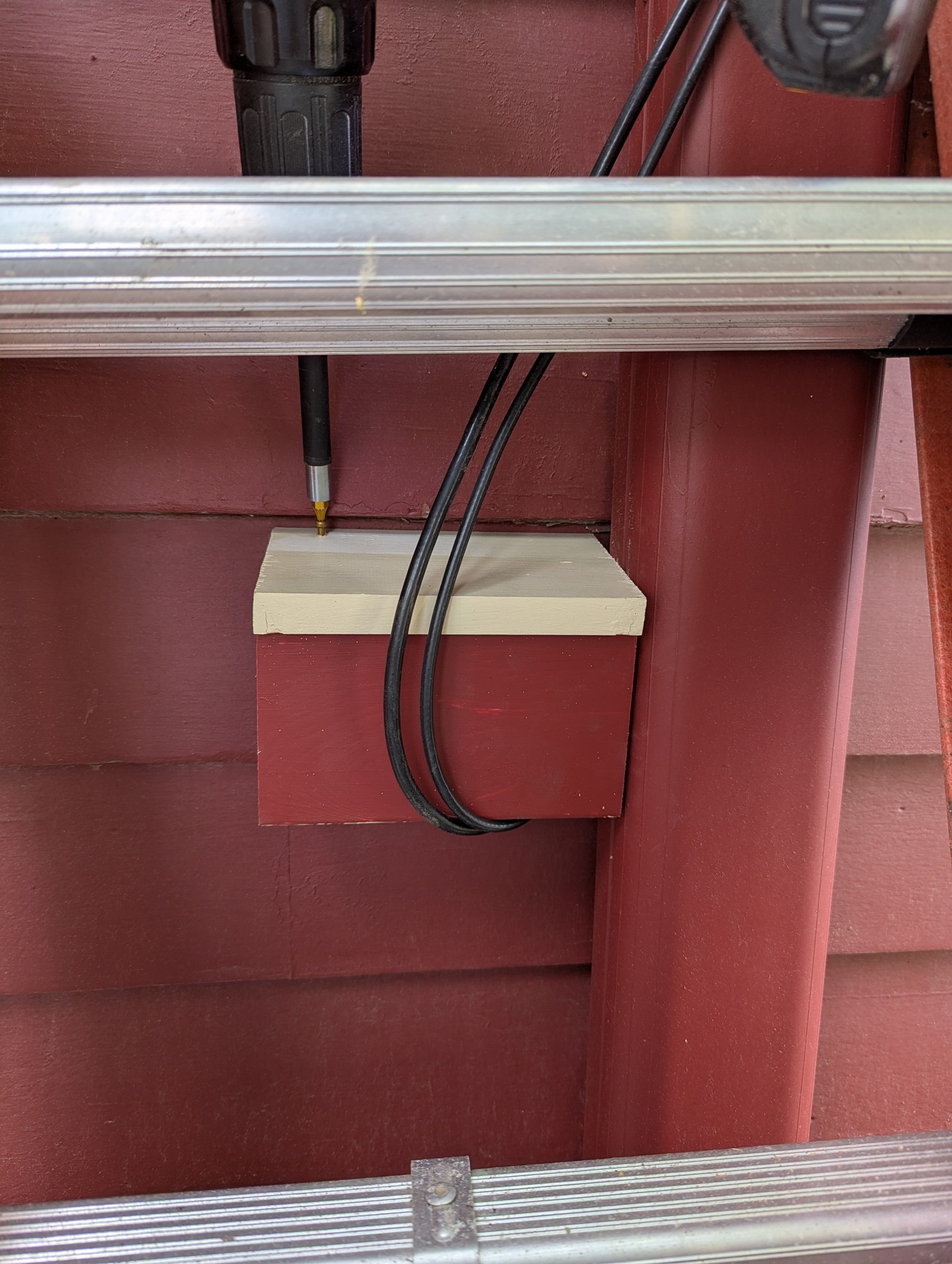
I mocked up the enclosure in cardboard. The position of the stud and existing hole meant it would be right up next to the line-hide for our mini split. My main goal is water protection, but also looking nice.
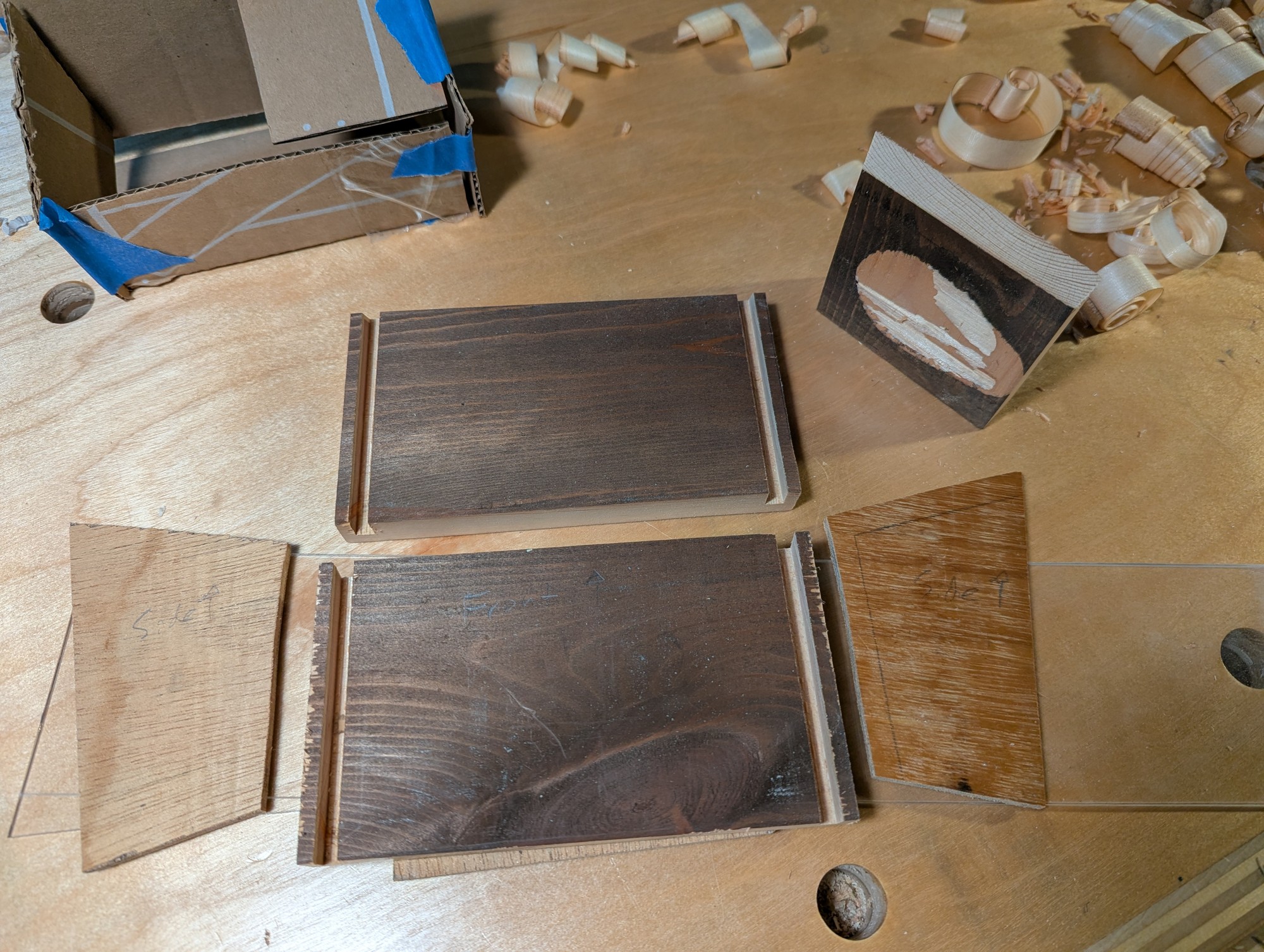
I cut the pieces from a scrap of solid wood from a table and bits of 1/4" plywood from an old shelf. Band saw, chop saw, and then dadoes with two offset passes on the table saw. Waterproof wood glue to assemble and house paint to finish.
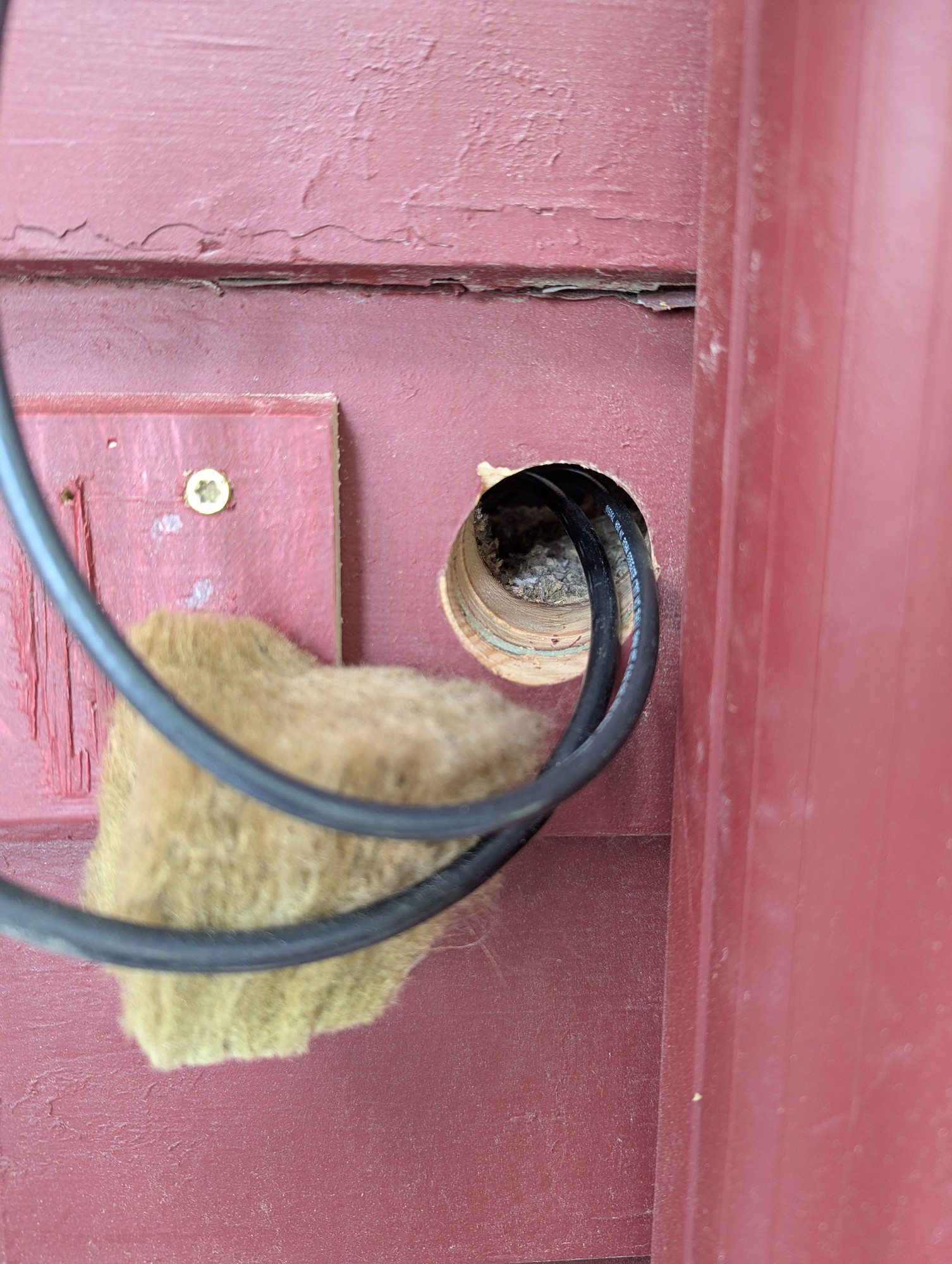
I enlarged the original hole to 1-1/2" with a hole saw. The first bit I got was too short (siding + sheathing is thick), but I found a longer one to complete the cut. I snipped a corner off some leftover rock wool from the basement to fill the hole. I made a small cleat to screw to the wall into the stud, which would then attach the enclosure to.
I didn’t account for how cramped it would be working behind the ladder. I also didn’t account for the space required to get to the top screws, especially with the metal flashing roof; I ended up giving up on those and just using one screw on the side.
Looks much cleaner inside. I got short male-male cables and adapters from ShowMeCables, which seem to work fine. Up next is a NanoVNA to check losses and tuning.
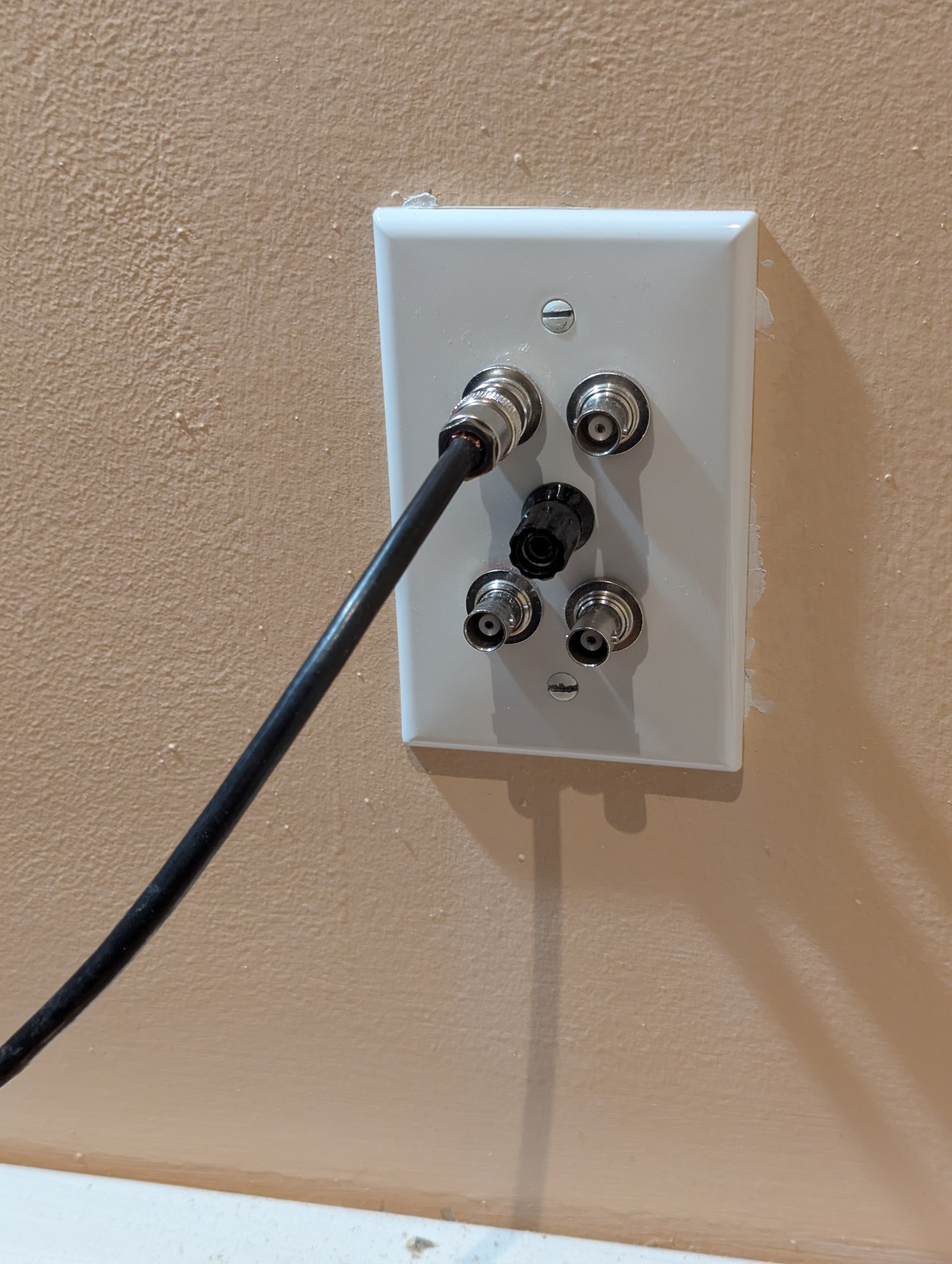
Future improvements are a ground rod connection and potentially lightning arrestores.
It looks good. I was lazy and used one of those brush wall plates for mine.
For the grounding, you can get a small piece of copper flat bar. It’s not that expensive and will give a good, solid ground connection to the bulkhead connectors passing through it. You can through bolt a ground lug to the copper bar to connect the ground cable to.
Also, a tip for installing old work boxes. There are 4 small holes in the corner. Hold the front of the box against the wall and poke a small nail through the holes, then use a straight edge to draw lines between them. That will perfectly mark the hole you need to cut out.
No drip loop?
The lowest point of the cable appears to be below the box and the box-to-house insertion point. So whether the water drips down the front, or leaks down behind the back of the box, that water is going to drip off that lowest point of the cable just as it would with a drip loop.
Drip loops are also generally a regulation for ease of repair as well. In the future if this cable needs a new tip you are left with very little to work with and may need to replace the entire run.
The dipole has a coil of spare coax closer to the antenna feed point, which I think also serves as an RF choke.
The VHF/UHV J-pole didn’t have any extra, but agree it would’ve been nice to keep a little extra coil if I’d had the option.
Stuff the hole w/ stainless steal wool, critters hate this trick.
Also a drip loop as has been said but a nice setup :)
Thanks!
Yeah, I considered steel wool. Between the styrofoam bottom and the rock wool and the height overall I’m hoping it’s not an attractive entry. The likelihood of sparks seems very low so maybe it’s irrational but the idea of steel wool next to electrical makes me a little uneasy. I may get some coax putty to fill in around the cables when I come back for the grounding line.
You can use duct putty, we called it “monkey shit”. Prolly the same stuff, grey, sticky, never really dries.
I worked in teleports so it could be called all kinds of different things. We mostly used it to seal up underground conduit penetrations into the antenna/PDU/ACU/Motor control cabinets also he IFL conduits.
Grey stuff? Electrical putty, plumbers putty.
I bet its all the same, but I’m partial to “Monkey Shit” nickname.
You can cut open and flatten a bit of wide (1”?) copper pipe to get a piece of copper sheet for grounding, if you can’t get it otherwise
Is there one bulkhead or two, and if one, how will you attach third and fourth cable?