- cross-posted to:
- lemmyshitpost@lemmy.world
- cross-posted to:
- lemmyshitpost@lemmy.world
cross-posted from: https://lemmy.world/post/50675931
You must log in or register to comment.
Because at the time it was named, there was no word for purple and it was called red
I don’t know if that’s true or not, though some color words are definitely older than others, so I can imagine it. Do you have a source?
I’m reminded of how the word “orange” is relatively recent, and named after the fruit. Ever wonder why people with orange hair are called “redheads” even though their hair isn’t technically red? From the links, “redhead” arose in the 1200s, while “orange” wasn’t used to describe color under the 1500s. So “red” was the closest color descriptor at the time “redhead” was coined.
What’s wild to me is that people didn’t used to distinguish blue from green
If you pickle that red onion, everything turns red. for example:

But that’s not the reason… from chowhound
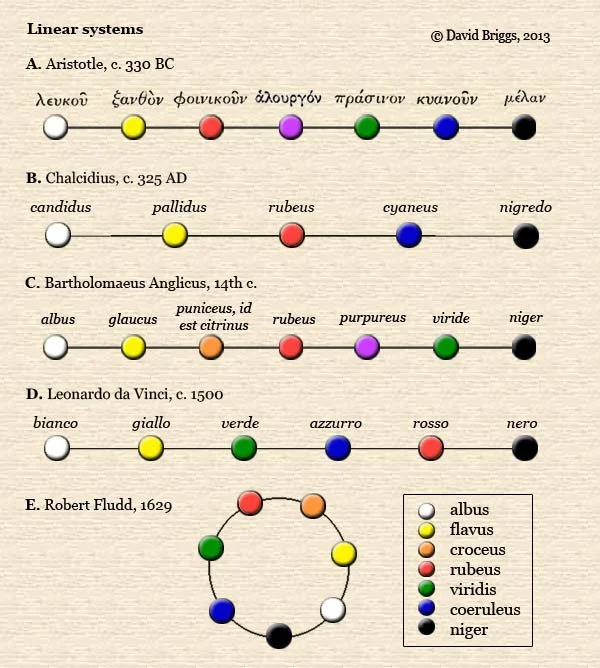
Red onions got their name because, at the time of their discovery, purple didn’t exist as a color descriptor. Over time, a more complex language for colors evolved, and hues like yellow, green, and, yes, purple, entered our vocabulary. As with many quirks of language, names don’t always evolve with our understanding of the world. (For example, the pineapple was named by a British explorer bereft of any understanding of the fruit.)
It may seem strange to think that specific names for colors are a matter of invention. After all, red and purple being two distinct colors seems like a simple fact today. However, it is important to note that language plays a big role in creating these variations. Pink, in particular, was not used as a color descriptor in English until the 17th century. And before the word orange was invented, orange items were often called red or geoluhread in English-speaking countries, which translates to yellow-red.
This goes for other colors too, such as blue in ancient greece. Also, Homer regarded wine, the sea, and sheep as all being the same colour, which is ‘red’.
Also in Japanese they didn’t had a separate word for green for a very long time. Green was just a shade of blue. It’s why a lot of things like fruits and vegetables have blue in the name like 青豆 aomame literally blue bean or 青林檎 aoringo literally blue apple. Or why they call the green light on traffic lights blue.
We call them salad onions and don’t mention a colour.
Just a guess but I know the word for “red” in more languages than I do for the word “purple”. It could be that it just makes it easier to talk about between people with different language skills.
Fuck, I just realized I only know how to say “purple” in English but I know the word for “red” in at least three. Is the word “purple” in other languages as weird as the word “purple” sounds to me right now? Does the word “purple” in other languages have better rhymes than it does in English?
I have more questions than I do answers and now we need more adults.
Funny thing : in French, the common word for the colours that English tend to call purple is “violet”, while the direct translation of purple, which is “pourpre” means a dark reddish purple closer to a dark version of what the English call “red violet”.
Enjoy confusion!
Cut that red onion! Cut it now! That’s flavor!
Red cabbage too. Very purple.
Depends on the acidity/basality. In a sour environment it’s definitely magenta
Red cabbage.
Purple carrots get to be purple, but, that may be because there are literal red carrots.
Purple peppers get called black or some such, but again, red peppers exist.
Because if you marinate them in vinegar they turn pink
My guesses are:
- they actually used to be red
- the meaning of red was different back then and included purple because of maybe the lack of purple pigment to dye clothes in
I’ve only seen it called a red onion at grocery stores, sometimes… otherwise everyone I know refers to it as a purple onion.
Must be some northern colloquial reference?Thank you, from now on I will refuse to understand when someone speaks about red onion: “Red onion you say? Never seen them. But I like the purple ones very much” [=
It’s English. There are sane languages who knows to call them lilac-onion, lilac-cabbage. Tho your yellow ones… They get to be called red - because it is a good deep dark orange dye if you boil the outer layers. (For example for Easter Eggs).
In Dutch they are called “rode ui” literally red onion. It’s not just English. In Japanese and Hindi they are also called red onions.
even in finnish it’s “punasipuli” (red onion)
FTR, it’s also called red in French.