- 90 Posts
- 46 Comments
Joined 7 days ago
Cake day: March 28th, 2025
You are not logged in. If you use a Fediverse account that is able to follow users, you can follow this user.


 1·13 hours ago
Lychee can grow at tropical latitudes, but it needs hot (rainier) summers and (drier) winters w/ 50-150 hours at 0-12°C in order to fruit well, so it’s more of a subtropical fruit.
 1·13 hours ago
!fruit@slrpnk.net welcomes you!






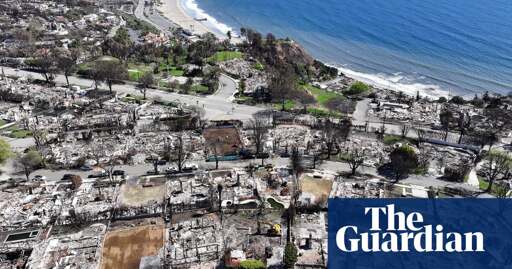




Thank you for sharing such beautiful words of wisdom in these troubled times.

 1·3 days ago
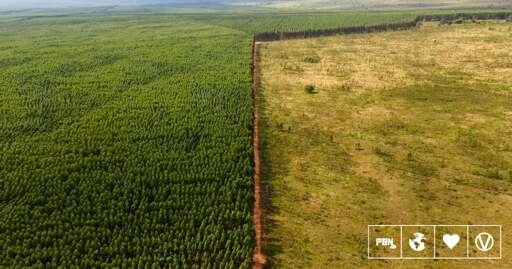
Even if you cover the whole planet in forests, there is a finite amount of fossil fuels you can burn before it is negated.
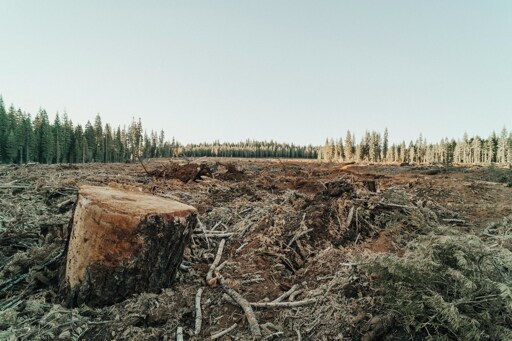
I think that this is the crux of the matter, and of course you’re right. The total amount of carbon stored in fossil fuels is (presumably, without searching for the numbers) much greater than the amount currently stored in living organisms, so there is a finite amount of fossil fuels that can be burnt before the carbon emissions exceed the capacity of forests/vegetation to capture it. Do you know what that “finite amount of fossil fuels” would be? From what I have seen, it is quite large, though humanity is rapidly approaching it. What’s needed is for the rate of emissions to be reduced below the rate of capture, and so a reduction in fossil fuel use is urgently needed, but I wouldn’t say that completely eliminating fossil fuel use is more important than protecting forests. All that’s needed in the long term is for carbon capture to at least equal carbon emissions. In the short term, the planet is already close enough to the “point of no return” that reforestation is necessary in order to bring down levels of carbon dioxide, regardless of how quickly fossil use ceases. It has to be both. Burning fossil fuels is not a sustainable way to meet the energy needs of 8 billion+ humans. Cutting down forests for biofuel is not a sustainable way to meet the energy needs of 8 billion+ humans. Deforestation for biofuel would be sustainable for a much larger population than would burning fossil fuels (due to the extremely slow renewal rate of fossil fuels), but we’re past that point. There’s not enough land. Either energy consumption needs to drastically decrease, or non-combustion sources of energy are needed.
I get the impression that we are essentially “on the same side” and just quibbling over details. You make an excellent case against fossil fuels! Looking at it in terms of the broader carbon cycle makes the necessity of ending fossil fuel use very obvious even ignoring any concerns about pollution, destructive extraction practices, or other harmful effects.
I understand what you’re getting at, but I don’t see it as being so simple.
Fossil fuels are essentially just ancient soil carbon, so in a way, we’re talking about the same thing on different time-scales. My point was/is that the combination of deforestation and burning of the cut biomass actually reduces the amount of carbon that can be stored in the soil on a given area of land, not just releasing it once and then recycling it. To capture the same amount of carbon again would require a greater area under management than the area originally cut. On a finite planet, there is a limit to how much this deforestation for biomass production could be scaled up without net-positive emissions. (I’m tired, so this may not be the most articulate.)
The world’s forests capture a substantial amount of the carbon dioxide emitted by humans, and extensive reforestation could capture even more. By reducing the carbon capture potential of forests, that’s less carbon dioxide absorbed year after year. Over a very long period of time, “releasing it one time” is what burning fossil fuels does: it releases stored carbon once, and then trees and other plants recycle it. Deforestation reduces the recycling.
Even though mature forests can store more total carbon, it seems that young forests, with more small trees, may actually be able to absorb more methane, so there can definitely be some advantage to managing trees for wood production on a short cycle. Methane is a much more potent greenhouse gas than carbon dioxide, so this is one way in which the overall situation is complicated.
Of course, avoiding both deforestation and fossil fuels is even better.
I’m glad that we agree on this point. It doesn’t need to be one or the other. The most effective approach to addressing climate change would involve reforestation and eliminating dependence on fossil fuels by developing clean energy technologies.
Ultimately, carbon capture just needs to match carbon emissions (plus a bit extra at first to compensate for current overshoot), and realistically, it will take both reforestation and a reduction in emissions to achieve that. Ending animal agriculture makes the most progress toward both.
 1·3 days ago
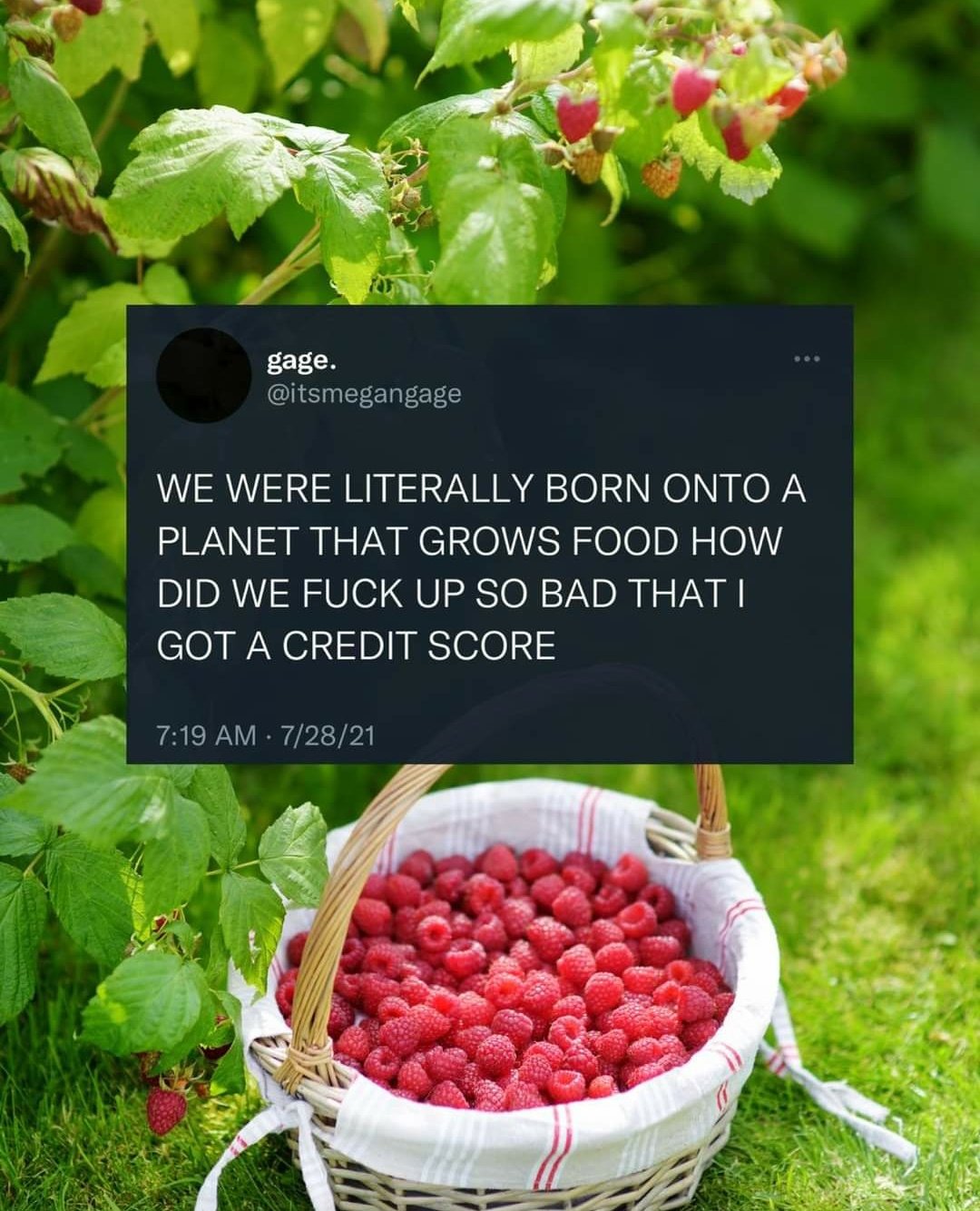
One more reason to grow your own food.
Not just strictly aquatic animals, either.
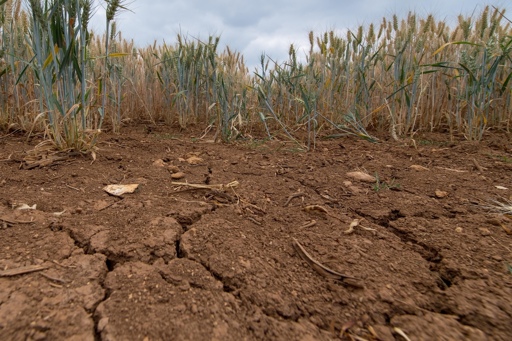
On the basis of monitored natural inland wetlands (including peatlands, marshes, swamps, lakes, rivers and pools, among others), 35% of wetland area was lost between 1970 and 2015, at a rate three times faster than that of forests.
Brazil’s Pantanal is at risk of collapse, scientists say (2022):
The Pantanal, which means “great swamp” in Portuguese, is the world’s largest tropical wetland, even bigger than the state of Florida.
This wetland savanna lies in the heart of South America and boasts one of the continent’s highest concentrations of plants and animals.
Pantanal’s intense blazes stoke fears of another destructive fire season (2024):
The clearing of vegetation for large-scale agriculture is also a growing problem in the wetlands. The Pantanal lost more than 49,600 hectares (122,600 acres) of native vegetation last year, according to MapBiomas, a 59% increase in deforestation from the previous year. “Because of the drought, people are clearing areas, deforesting, in the center of the Pantanal,” Rosa said.
Act now or lose the Pantanal forever (2024):
This year, over two million hectares of the world’s largest wetland, the Pantanal in Brazil, have burned, as agribusiness drains it and climate change dries it, reducing river flows and allowing fires to spread.
While the fires that ravage [the Pantanal] are often set by individual ranchers, they are worsened by a toxic mix of drought and extreme weather caused by the climate crisis, land clearing for cattle ranching and monoculture farming, mining, road construction, and hydropower. It is also largely unprotected – around 93% of the Pantanal is private land, and 80% of that is used for cattle ranching.
Indonesia is clearing vast peatlands to grow food. Climate costs are dire. (2024):
From 1995 to 1998, Indonesian dictator Suharto led a project to cultivate nearly 2.5 million acres. To drain wetlands in Kalimantan, more than 2,000 miles of canals were dug, many of them so wide that they’re still visible from airplanes decades later. A group of visiting European researchers said at the time that it would take centuries for the ecosystem to recover. “Peatland destruction,” they warned, “is an irreversible process.”
World’s biggest deforestation project gets underway in Papua for sugarcane (2024):
A total of 2 million hectares (5 million acres) of forests, wetlands and grasslands in Merauke district will be razed to make way for a cluster of giant sugarcane plantations, part of the Indonesian government’s efforts to boost domestic sugar production.
Indonesian forestry minister proposes 20m hectares of deforestation for crops (2025):
The clearing of 20 million hectares of forests could release up to 22 billion metric tons of carbon dioxide, equivalent to the annual emissions from nearly 5,300 coal-fired power plants.
The same patterns keep repeating. Until humans learn to consider other beings and their habitats, the problem will continue to get worse.
Veganic agricultural practices, including syntropic agriculture and agroforestry techniques, can produce food sustainably, free up land currently used for grazing and “livestock” feed, and spare vulnerable ecosystems like wetlands, all while mitigating climate change.
 5·4 days ago
I did not know that. I had seen similar posts and thought that it was acceptable.
@hydra@lemmy.world, if you agree with jagged_circle, please remove this post.
Is that against the rules?
I don’t think it’s so easy to say that burning biomass is superior (from a carbon sequestration perspective) to preserving old-growth forest even if that means relying on fossil fuels (e.g. natural gas for heating). I don’t know the answer, but considering that burning biomass does not allow that carbon to accumulate in the soil over time as it would in a mature forest, the alternative to burning biomass would need to have very high emissions in order to come out ahead.
Of course I am not advocating for burning fossil fuels; I am only advocating for protection of forests. I don’t think that biomass would be a viable fuel for air travel in particular due to the energy density needed, but if so, and if non-combustion energy sources could be used everywhere else, then farming some young trees to continually cut to use for biofuel for air travel wouldn’t have so much of an impact if that land would not be forested anyway. Freeing up land currently used by animal agriculture to use it for this purpose would be an improvement, but “chopping down a forest” would be highly questionable.
Do you have any hard numbers comparing the total lifecycle emissions of fuelwood to those of other fuels (coal, gas, jet fuel, whatever), taking into account soil carbon as well? If the carbon emissions argument for protecting forests doesn’t make sense, I will stop using it. Deforestation brings plenty of other problems (biodiversity loss, habitat fragmentation, increased run-off and erosion…) that I/anyone could focus on instead.
OP: Whenever you’re looking for a specific plant, it helps to give the scientific name, as many plants share vernacular names or go by different vernacular names in different areas. I think that “white clover” pretty much always refers to Trifolium repens, but including the scientific name is still a “best practice” to keep in mind.
For anyone else reading, Fedco (Not Sponsored™) sells bulk white clover seed in the USA:
 1·4 days ago
Another politician promises to save the rainforest? Good luck with that.
One would think that far-right free-market people would at least make the point about supply and demand; if the people stop buying it, the businesses will stop doing it. Alas, it seems that the majority (of the loud voices in the news) still prefer to downplay or deny the environmental crisis altogether.



Thank you for taking the time!