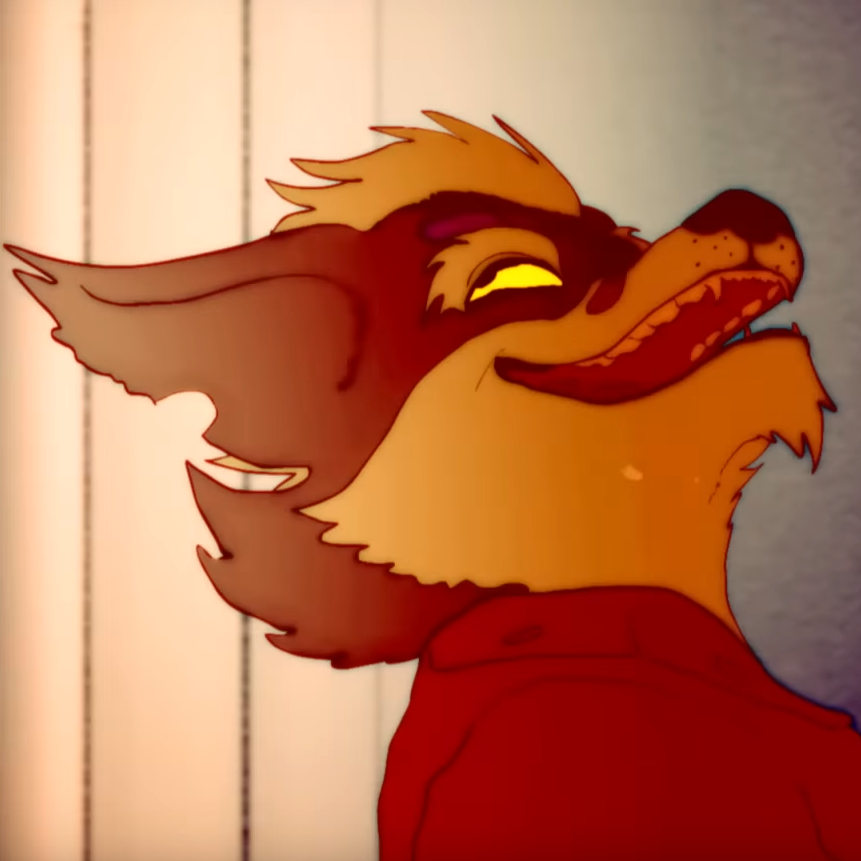

In anime years, that’s like 80
To be completely fair to him, he is essentially back in high school with a bunch of 15-19 year olds and a 17-year-old as his commanding officer. I would become depressed too
You must log in or # to comment.
Anime is weird about age. Isn’t that right, 5000 year old cat girl who has the body of a 12 year old?
The more common weirdness is that they’ll write what is fundamentally a story about adults, with characters that act like adults and are drawn as adults, but then they’re targeting serialization in Shonen Jump or the like so they bound all the character’s ages to like 14-20 and maybe make them have school instead of work if it’s a setting with schools vs a fantasy adventure story.
It’s very funny when contrasted with something like ZOM100 where the characters are all 18-27 and have a realistic mix of appearances and how much they’re showing their age: two of the characters are 23 and of them one looks younger and the other looks older, the 27 year old looks 20, the 18 year old looks early to mid 20s, etc, because people do age inconsistently over their 20s and 30s; and they’re all drawn in the same way normal shonen slop draws its 14-20 year old cast, because of the aforementioned “write and draw adults, then clamp their stated ages lower” trend.
One of my friends who is a huge weeb used to joke a lot that “Anime hates adults”
I wonder if it’s a marketing thing. The whole capitalist thing of ‘pretty and young sells’?
In addition to what’s already been said, a lot of it is people’s nostalgia for childhood because that’s the last time they had meaningful relationships. Japan’s education system has kids together in the same class from Kindergarten through 8th. Grade. Teachers change between classrooms, but each classroom stays put. This means you really get to know the same thirty or so people. Then for high school, people may go to different schools, but high school repeats the process where you have the same class all four years.
And BAM! Graduation happens. All those people you’ve spent your entire life with go to different places. Some will go on to university and get salary jobs after. Some didn’t score well enough on the entry exams and will be stuck working dead end jobs the rest of their lives. Regardless, you get crushed by the capitalist machine.
What’s different about other places is how we don’t spend all of elementary school together. We often get different kids in our classes each year. Then we shuffle between classes and subjects in middle school and high school. We lose touch with people from our youth. But it’s not like we haven’t lost touch with people we used to hang out with in elementary school by the time we hit high school, even when we go to the same school.
In Japan, there’s like this trauma that happens to each generation where the last time they remember having any real friends is high school. So a lot of anime/manga has younger characters because that’s the last time anyone remembers being able to change anything or had hope for the future.
Berserk’s author, Kentaro Miura, said he based the protagonists, the Band of the Hawk, and its characters on his friends from school.
Japan’s education system has kids together in the same class from Kindergarten through 8th. Grade. Teachers change between classrooms, but each classroom stays put. This means you really get to know the same thirty or so people.
Wait, they’re literally in the same class from kindergarten until they’re like 15? Dang. In Finland you get shuffled into a new group of kids when you go from pre-school to elementary school, then to middle school, with potential overlap in classmates provided no one moves away or if you don’t apply to some special school. Until high school classes are typically taught together as a unit setting aside elective language classes, religious education (which is mandatory), etc
Yeah. It sounds like Finland is mostly the same as the US. Here you get different classmates each year, but you’re together all year and often have recurring classmates until middle school, where you have different people each subject.
It makes a lot of Japanese media hit differently when you learn how their K-12 program works. In Another, for example, a girl is ostracized by her classmates due to them believing in some type of curse and they pretend she doesn’t exist. So imagine the horror of going through that for years.
I wonder if it’s a marketing thing.
It’s genre bias towards what’s more or less the equivalent of the Young Adult genre/demographic, where it’s being targeted for sale to like older elementary school students and middle schoolers, then high schoolers and actual young adults as a sort of tacked on target demographic. And then it just remains popular with some adults because it’s the slop they grew up on and some of it is quite tasty slop, the same way you have adults in the US reading The Hunger Games or Twilight or whatever.
Like basically kids want to read/watch stories about people who are just a little bit older than themselves and who have more agency and opportunity than themselves (so young-to-mid teenage casts, basically), then teenagers want to read stories about people their own age who have more agency and more idealized lives than their own, then older teens and younger adults may dip out and consume something else, then adults go back to wanting to read about an idealized past and characters who don’t have to deal with the shit they have to deal with so they start chowing down on the same old slop with less regard for the characters’ ages than for the rest of what’s going on.
It basically makes a perfect storm of “you can sell this to almost everyone who’s interested in whatever genre it is by scaling the casts’ ages on a curve from 14 to 20”.
And some of it is just trailing genre conventions as this simulacrum of a simulacrum thing where it’s not even doing it for the reason it’s done, it’s just doing it because it’s done in the first place.
I mean, like, you could make anime and manga for adults without it being a ‘What I grew up with’ thing. Otherwise you fall into that trap of “Animation is just for kids” which only really exists because Disney decided to market animation as for kids and their parents. That’s why a lot of animation that isn’t American (and pre Disney dominated 30s US animation) used to be a lot less rigid in what demographic it aimed for (Less common now outside of arthouse and indie stuff as American animation has spent like a centuries marketing animation as something for children).
I am very against the idea that most media should be made for a demographic in mind (outside of educational content and content for literal babies). I think artists should tell the stories they want to tell and if people want to read those stories, great.
Sorry, I find the subject interesting (and confusing because social norms confuse me). Particularly interesting to me is as a response to certain art being depicted as only for kids/teens we are now getting a bunch of indie projects that focus around trauma and other heavy subjects, almost because this stigma causes them to have to prove their maturity.
I mean, like, you could make anime and manga for adults without it being a ‘What I grew up with’ thing.
They do, there’s just an oversaturation of stuff that’s at least trying to dip into a teenage demographic too, and some things that are completely targeted at adults (like ecchi trash like Mahou Shouji ni Akogarete, where IIRC the characters only get given their incongruously low ages in non-story info cards between chapters, and their ages aren’t mentioned in the anime at all) do it as a genre convention or because anime exists as this unreal simulacrum of earlier stylized works made by nerds who grew up internalizing all these tropes and cliches that they then riff of in lieu of relating it to anything more real and substantial - basically what Miyazaki was railing against when he said that “anime was a mistake”.
Plus the entire LN/manga/anime ecosystem has been refined into this tightly calibrated slop mill where authors pretty much workshop YA fiction novels through chapter-by-chapter web publishing, the successful ones become actual published novels, the successful novels get manga adaptations, and the ones where the novels and/or manga adaptations are really popular get anime adaptations that are usually pretty close 1:1 conversions of the source material since those are written with the hope of them being turned into scripts in mind.
Not to mention the extreme dominance of the isekai genre as this cathartic escapist “haha imagine if the funny truck saved me from having to deal with all this shit anymore and I got to do wish fulfillment adventures in a fantasy world instead haha” power fantasy shit, which further adds on the angle of taking an already-adult/teenage character and letting them start life over from some earlier point. Tangentially, that’s kind of the core premise of ZOM100 except without the death and reincarnation bit, and it ruthlessly criticizes the nihilistic escapism in an almost dialectic process to bring it to a more prosocial and hopeful place.
basically what Miyazaki was railing against when he said that “anime was a mistake”
Miyazaki continues to be correct. The amount of nerds who shat on him because he hated on mass produced slop and AI makes me laugh. They got so mad about it.
Tangentially, that’s kind of the core premise of ZOM100 except without the death and reincarnation bit, and it ruthlessly criticizes the nihilistic escapism in an almost dialectic process to bring it to a more prosocial and hopeful place.
Is it good? I hate isekai with a burning passion, but the idea of an isekai that is anti-isekai while managing to be hopeful about it sounds pretty cool
Is it good? I hate isekai with a burning passion, but the idea of an isekai that is anti-isekai while managing to be hopeful about it sounds pretty cool
It’s not an isekai at all, it just thematically tied into my jab about the underlying premise of isekais as escapist fantasies. It’s a zombie apocalypse story that starts with a severely burnt out 23 year old office worker whose response to the world ending around him was “holy fuck, this means I don’t have to go to work anymore! I’m free! I’m gonna do everything I wanted to do but couldn’t because I was too busy working!” and then iteratively interrogating that premise to pull out the nihilism and recklessness to arrive at this hopeful and prosocial place that can sort of be summed up as “even in the face of horror and calamity you have to try to enjoy life and help others keep going too”.
The manga is very good, and the anime is gorgeously animated and incredibly stylish (and was done by the same studio that’s doing the Witch Hat Atelier adaptation that’s airing now) and reaches up through the arc that directly pits the cast against narrative foils representing the sort of antisocial nihilism of the protagonists’ starting point without the empathy and self-awareness that steered them away from it.
Later in the manga it literally has one of the protagonists quoting Marx at the culmination of an arc about capitalists using wealth inequality to literally feed people to zombies as entertainment as part of a monstrous gambling show.
The only bad thing about it is that especially as it goes past where the anime ended it can get very
 [regional tourism gimmick]
  in some parts and can be a bit too wide-eyed and idealistic about some things (although some of that is an intentional false facade to set up a criticism of it afterwards, much the same way it presented the protagonists initial “I’m so happy the world is ending because I was just that miserable at my job” uncritically and idealistically before interrogating and criticizing it).

Idk anything about these characters but at face value it kinda feels like the opposite of the young rebel trope, lol. Dude seems to have grown up respecting the “authority” of elders, only to finally understand, with maturity, that it was all an illusion.
It turned out he’s bitter because he was the only survivor of both of his military unit and his village in the last war, so his attitude is not that unreasonable. I just initially found it funny that he was the oldest character that had joined your squad and that these were the first words out of his mouth
How every protagonist looks to anybody over 25

35

lmao, that’s how
oldyoung he was? Makes me wonder how old Cid in FFVII was supposed to beCid
He’s 32 in FFVII
He’s written like a bitter 45 year old
This guy is 32

and a 17-year-old as his commanding officer
IDF